Air cargo must balance resilience with emissions
Friday, September 18, 2026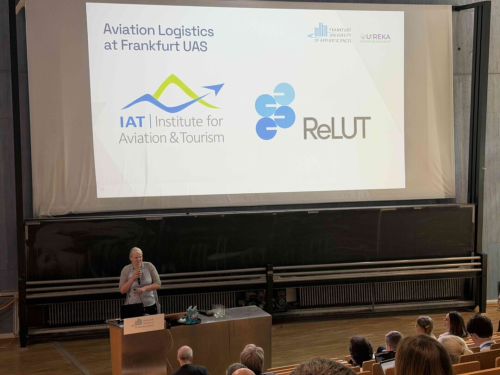
- Airfreight’s strategic value lies in optionality: Air cargo is one component of a fragmented multimodal network, but its ability to provide speed when road, rail or ocean routes are disrupted can make the entire supply chain more resilient. The priority is not necessarily to move more freight by air, but to retain the ability to use it when needed.
- Sustainability means both flying cleaner and flying less: SAF and more efficient operations can reduce aviation emissions, but modal choice and better aircraft utilisation are equally important. Pharmaceuticals, with their high value and time sensitivity, may be relatively well placed to absorb the premium for lower-carbon airfreight where air transport is genuinely necessary.
- Better information could improve both resilience and sustainability: Fragmented data on capacity, demand, shipment status and disruptions prevents the industry from using existing transport capacity efficiently. Greater transparency and connectivity could enable better modal decisions, reduce empty capacity and ensure pharmaceuticals reach patients without adding unnecessary flights.
Modern supply chains depend on complex combinations of transport modes, with products often moving through several different companies and infrastructure providers before reaching their destination.
Air cargo sits within this wider system rather than operating as an isolated mode. A shipment may involve a shipper, logistics service provider, trucker, cargo handling agent, airline, airport and ground handler, with each relationship governed by different commercial arrangements.
That fragmentation can make the system difficult to coordinate, but it also means air cargo can provide a valuable additional option when another part of the network becomes constrained.
The value of aviation is therefore not simply the number of tonnes it transports. Its strategic value can lie in having the ability to use it when speed or disruption makes another mode unsuitable.
“The air cargo supply chain is super fragmented,” Professor Dr. Anne Lange of Frankfurt University of Applied Sciences, said, speaking at Day One of the 2026 Pharma.Aero Masterclass at the Frankfurt University of Applied Sciences. “There are a lot of players, and we have a lot of different contracts, with different people making business with different people.”
Resilience is about having options
Resilience should requires a solid network with alternatives. If one route or mode becomes unavailable, another can be activated. Air cargo is particularly useful in this respect because it can provide speed when supply chains need to recover quickly. But the wider network still needs road, rail and maritime options to avoid becoming dependent on aviation.
That makes multimodal connectivity a key component of resilience. Companies do not necessarily need to move more cargo by air; they need to retain the ability to move the right cargo by air when circumstances demand it.
“If you have an amazing tracking or transportation network and you need this treatment to be delivered, the entire transportation network only works because you have the opportunity to use air cargo when you need it,” Lange tated.
“Sometimes it pays off just to have the potential to do something, even though you may not need it, and keeping that option is important.”
The sustainability trade-off
Transportation contributes significantly to global emissions, while aviation’s share is particularly important given the relatively small proportion of global freight moved by air compared with the value and emissions associated with the mode.
The sustainability question therefore has two dimensions. The industry can attempt to reduce the emissions associated with every flight, but it can also ask whether the flight needs to happen at all.
That makes modal choice a central part of the sustainability debate. Some goods can move by sea or rail without creating unacceptable service risks, while other products, particularly high-value, time-critical or temperature-sensitive pharmaceuticals, may have few realistic alternatives.
“We need to reduce emissions, and there are basically two ways of reducing emissions,” Lange explained. “The first is to fly with less emissions, but the other option is not to fly with less emissions, but to fly less.”
SAF is part of the answer
Sustainable aviation fuel will play a role in reducing aviation’s emissions, but its availability and price remain significant constraints.
The pharmaceutical sector could nevertheless be an interesting part of the transition because the high value of many medicines means the additional cost of lower-carbon aviation may represent a relatively small proportion of the final product value.
That does not solve the supply problem for SAF, nor does it remove the need to improve aircraft efficiency and operations. But it suggests that some pharmaceutical supply chains may be better positioned than lower-value freight to absorb the additional cost of more sustainable aviation.
The commercial question is whether customers are willing to pay for that environmental performance and whether sufficient SAF can be made available at scale.
“The add-on for SAF may not be huge, especially when the value of the product is already high enough,” Lange outlined.
“Pharma may be a product that could move us towards more sustainable aviation, even though I am aware of the problems we have around SAF availability and prices.”
Stop flying empty capacity
A more immediate opportunity lies in using existing aircraft capacity more effectively, with the industry having the ability to accept flights operating with unused space when better information and coordination could potentially allow additional cargo to be consolidated.
Higher utilisation would spread the environmental impact of a flight across more freight, improving the emissions performance per unit transported without requiring additional aircraft movements.
The challenge is commercial as much as operational. Cargo capacity is distributed across airlines, forwarders, airports and other intermediaries, while information about available space is often fragmented.
Better visibility could therefore create an opportunity to improve both economic efficiency and sustainability.
“If we think about capacity utilisation, we have to ask why we fly with empty space,” Lange laid out. “If we can use the capacity that is already there better, we can improve the efficiency of the system without necessarily adding more flights.”
Information is the missing layer
The fragmentation of the physical supply chain is mirrored by fragmentation in information.
Products can move relatively easily through the logistics system while the commercial and informational relationships behind those movements remain much more complicated.
Different companies often hold different pieces of information about capacity, shipment status, demand and disruption. Because these systems are not always connected, decisions may be made with only partial visibility.
A more transparent information layer could allow shippers and logistics providers to identify available capacity, react to urgent shipments and make better decisions about modal choice.
The benefit would extend beyond sustainability. Better information could also help companies respond more quickly to disruption and use the wider transport network more effectively.
“Products flow relatively easily, but the commercial flows behind them are extremely complex and hard to disentangle,” Lange highlighted. “If the industry can create more transparency and use that transparency to improve decision-making, we can fill capacity better and make sure pharmaceuticals get to their destination even more effectively than they do today.”
From transport mode to decision system
The wider implication is that air cargo should be viewed less as a standalone transport solution and more as one component of a flexible logistics network.
For pharmaceutical companies, that means understanding when speed justifies aviation and when another mode can provide a lower-emission alternative without compromising product quality or patient access.
It also means building systems that can make those decisions dynamically. If capacity, shipment urgency, disruptions and available alternatives are visible in one place, companies can make more informed choices rather than relying on fixed transport strategies.
Such an approach could help resolve some of the apparent tension between resilience and sustainability. The objective is not to maximise airfreight or minimise it, but to deploy it where its strategic value is greatest.
“The question is not whether air cargo is resilient by itself,” she concluded. “It is about whether the availability of air cargo makes the entire transport network more resilient, because sometimes having an additional option is what makes the difference.”
Source : https://aircargoweek.com/air-cargo-must-balance-resilience-with-emissions/